
Grassroots Labour Organising – Film Screening
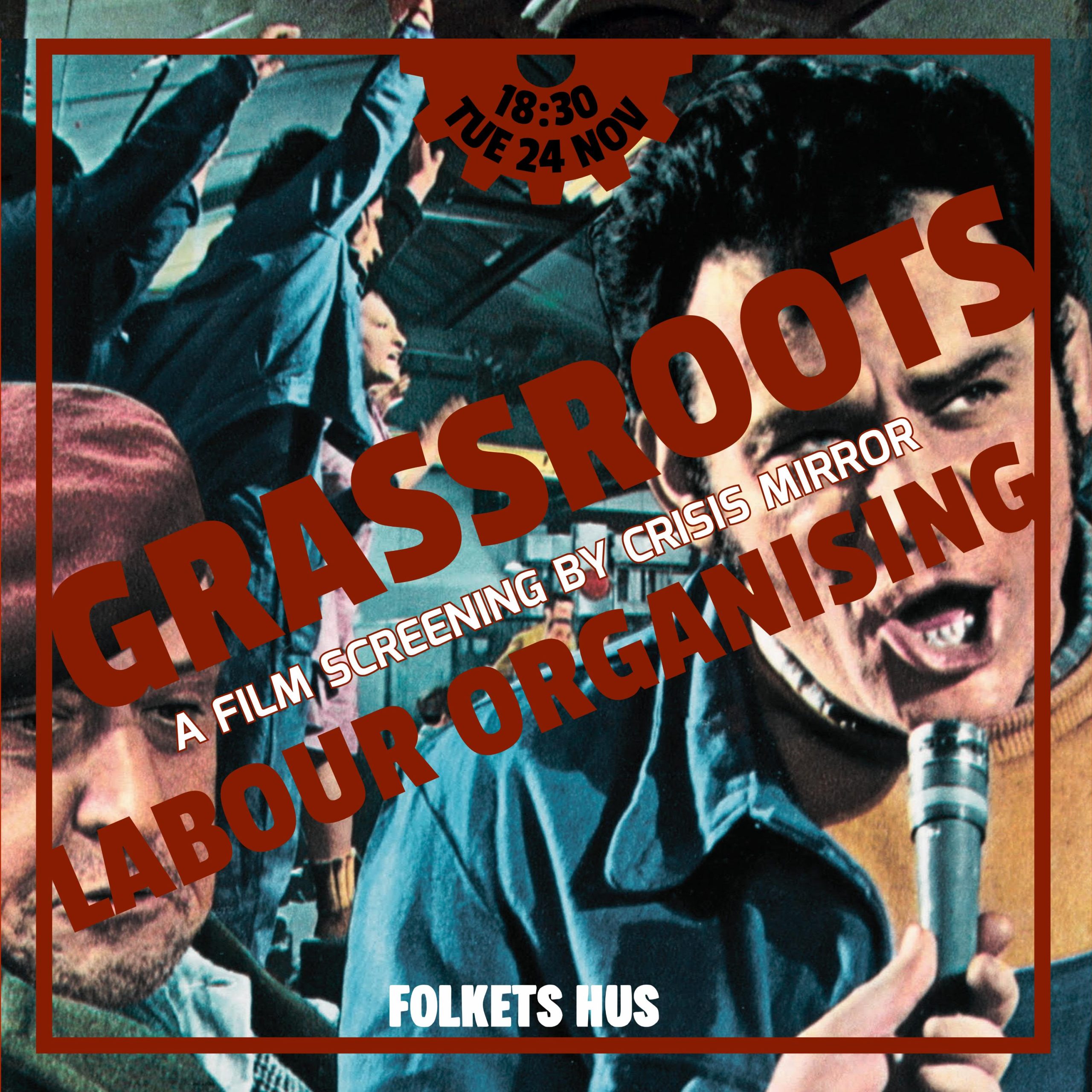
🎬 La Classe Operaia Va i Paradiso (Τhe working class goes to heaven), 125′, Elio Petri, 1971
“The Working Class Goes to Heaven” aka “Lulu the Tool” is part of a thematic trilogy that is referred to as the “trilogy of neurosis”. The other two films are “Investigation of a Citizen Above Suspicion” and “Property Is No Longer a Theft”. Neurosis of work, neurosis of power, and neurosis of money, pretty much an anticapitalist trilogy.
All three movies were shot in the early 70s, a period of intense social and political turmoil in Italy. In the 1968, the student movement took to the barricades and opened a breach in the system of power. Social movements started flourishing on that basis, addressing the failures of modernising capitalism. 1969 was the year of the factory working class, when new factory councils emerged; the industrial centers of Northern Italy faced a series of large strikes demanding higher wages, improved working conditions and greater workers’ autonomy. Those years had an extremely radicalising effect on young workers and students. The degree of political radicalisation is reflected in the growth of extra-parliamentary left wing groups. By the end of 1977,up to 100.000 people participated in these grassroots organizations.
In La Classe Operaia Va i Paradiso, Petri made labour the subject in film. Through observation, waged work is portrayed as a routine form of spiritual deadening, and the factory as a human-devouring machine.
It might sound heavy for a Tuesday afternoon, but Petri’s ideological commentary is seamlessly integrated into the plot, which is as humorous as it is intense. Worth noting, that the Italian Left fought bitterly over this film, with some acknowledging its emancipatory perspective and others dismissing it as reactionary.
🗓️ Tuesday 24 November
📍 FolketsHus
🕰️ Doors open at 18:00
🕰️ Film starts at 18:30
💸 Free entrance, cash for the bar
❗ No alcohol served at the cafe at the moment, BYOB

